What is the Depth of the Black Sea?

The Black Sea is a sea that stands out with its depth, and this depth has significant effects on the region's ecosystem and marine biology. The deepest point of the Black Sea is located in an area called Green Cape, which reaches a depth of approximately 2,212 meters. This depth has a major impact on the sea currents and climate of the Black Sea. Additionally, the depth determines the habitats of organisms on the sea floor, making the depth of the Black Sea an important topic in marine biology.
The depths of the Black Sea exhibit diversity with various structures and formations on the sea floor. For instance, different morphological features such as sea troughs and plateaus increase the variability of the depths. This diversity is one of the factors affecting marine life in the region. The depths of the Black Sea are also significant for fishing activities; as some fish species live in deep waters while others prefer shallower areas.
The depth of the Black Sea also influences the temperature and salinity of the seawater. In deep waters, the water temperature is considerably lower compared to the surface, while salinity levels can vary with increasing depth. This situation maintains the balance of the marine ecosystem and affects the life cycles of many marine organisms. Furthermore, the depths of the Black Sea are filled with various geological structures formed in the past, providing great potential for marine research.
What Are the Important Ports in the Black Sea?
The Black Sea is a sea that draws attention with its strategic location and natural riches. This sea hosts many important ports. Especially significant for trade and fishing, these ports form the lifeblood of the regional economy. Countries located along the Black Sea coast find opportunities for both local and international commercial activities through these ports. Therefore, conducting a detailed examination of the characteristics and functions of these ports is crucial for understanding the economic dynamics of the Black Sea.
One of the most important ports in the Black Sea is Istanbul Port. This port holds a special position due to its location in Istanbul, Turkey's largest city, and its historical significance as an important trade hub. Istanbul Port plays a major role in cargo transportation as a stop for both domestic and foreign ships. It greatly contributes to the regional economy by enabling the rapid transportation of raw materials and products.
Another important port is Trabzon Port. Since Trabzon is one of the significant centers of the historical Silk Road, this port is also of great importance for trade. Trabzon Port is particularly the center of export and import activities for the Eastern Black Sea Region. The port also represents an important base for fishing activities, thus making a significant contribution to the livelihood of the local population.
In addition to these, Batumi Port is also an important point. Located in the city of Batumi, Georgia, this port has great potential for both trade and tourism. Batumi Port strengthens relations with countries located to the north of the Black Sea and supports regional collaborations. Especially during the summer months, being a stop for tourist ships increases the importance of this port. Therefore, the ports of the Black Sea play a critical role in the development of the regional economy.
How is the Black Sea Climate Defined?

The Black Sea climate is generally a mild and humid type of climate. This climate type has a hot weather structure in the summer months and a cold and rainy atmosphere in the winter months. The most distinctive feature of the Black Sea climate is the regular distribution of rainfall throughout the year. These rains support agricultural activities while also nourishing the natural life in the region. The climate of the Black Sea Region is shaped by the maritime effect; therefore, the climate in the coastal areas is milder and more temperate compared to the inland areas.
In the Black Sea, summer months are generally cool and rainy. During this period, the average temperature ranges between 20-25°C. In the coastal areas, temperatures fluctuate less due to the maritime effect, and humidity levels are high. In the winter months, the cold face of the Black Sea climate reveals itself; temperatures typically range between 0-5°C, and snowfall is common. This affects the natural life in the region and allows for the development of various vegetation.
Another important feature of the Black Sea climate is its high humidity. Humidity levels in the coastal areas range from 75-90%, while this rate is lower in the inland areas. This high humidity increases the productivity of the forests and agricultural lands in the region. Particularly, agricultural products such as tea, hazelnuts, and corn are cultivated thanks to the opportunities provided by this climate. Additionally, this climatic structure contributes to the richness of water resources in the region.
In conclusion, the Black Sea climate is a highly productive type of climate in terms of natural life and agriculture. Regular rainfall throughout the year, mild temperatures, and high humidity allow for the healthy continuation of the ecosystem in this region. The advantages offered by this climate enhance the region's appeal not only for agriculture but also for tourism. Therefore, the preservation and sustainable management of the Black Sea climate is of great importance.
What is the Geographical Location of the Black Sea?

The Black Sea is an important body of water that separates the continents of Asia and Europe. To the north, the countries surrounding the Black Sea include Ukraine and Russia, while Turkey is located to the south. On the eastern side, there are countries like Georgia, and on the western side, Romania and Bulgaria. Due to its strategic location, the Black Sea has historically been a crossroads of significant trade routes. In this respect, it holds great importance both geographically and economically.
The Black Sea has an area of approximately 436,000 km² and a maximum depth of 2,212 meters. This depth varies across the sea, with some areas being significantly deeper. Additionally, the surface of the Black Sea is fed by various rivers and streams. Notably, the Danube, Dnipro, and Don rivers are important water sources that affect the water level and ecosystem of the Black Sea.
Geographically, the Black Sea creates a transition zone between two main climate types. While continental climate characteristics are observed in the north, the Mediterranean climate shows its influence in the south. This situation creates diversity in many areas, from the region's vegetation to agriculture. Particularly, coastal areas are enriched with Mediterranean plants such as olives and citrus fruits, while the interior regions focus more on grain and fruit cultivation.
The geographical location of the Black Sea is also of great importance in terms of maritime transportation routes. This sea plays a significant role in global maritime trade by connecting to the Mediterranean. Through the straits, there is a considerable number of ships entering and exiting the Black Sea. This situation strengthens the economic relations of the countries in the region and promotes regional cooperation.
Which Countries Border the Black Sea?
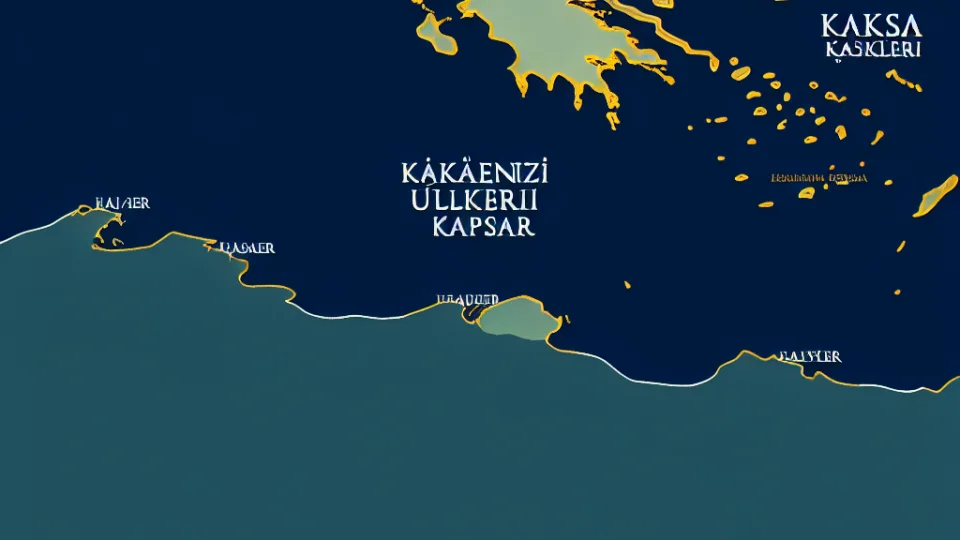
The Black Sea is an important body of water located at the intersection of Europe and Asia. This sea is home to the coastlines of a total of six countries. These countries include Turkey, Georgia, Ukraine, Russia, Romania, and Bulgaria. The coastline lengths and relationships with the sea of each country contribute to the economic and cultural richness of the Black Sea. For example, Turkey's northern coasts are notable for their freshwater resources and rich fish population.
The countries along the Black Sea differ in their geographical and climatic characteristics. For instance, while Turkey's Black Sea coasts are known for their temperate climate, the coasts of Georgia are predominantly covered with tropical vegetation. The coasts of Ukraine and Russia, on the other hand, experience colder climatic conditions. These differences allow for the development of various economic activities in the coastal regions of each country.
Trade and cultural interaction among the coastal countries are quite intense. Particularly, sectors such as fishing, tourism, and maritime transportation hold significant importance in the economies of these countries. For example, Turkey's Black Sea coasts attract a lot of interest from tourists during the summer months. At the same time, these coasts are also notable for their historical and cultural richness. Coastal countries are enhancing their trade with each other via sea routes and increasing collaborations in the region.
What Natural Beauties Can Be Found in the Black Sea?

The Black Sea is a region famous for its various natural beauties. It particularly stands out with its green mountains, cool rivers, and stunning beaches. The plateaus in this region are popular destinations for both domestic and foreign tourists. Especially, Ayder Plateau is renowned for its natural springs and unique landscapes. Additionally, the forested areas in the region offer a rich ecosystem with diverse flora and fauna. These natural beauties are elements that enhance the allure of the Black Sea.
The coastline of the Black Sea is rich not only in beaches but also in natural harbors. For example, the Sürmene district of Trabzon is known for its natural beauties, and the blue flag beaches here attract the attention of local and foreign tourists during the summer months. Furthermore, the sea caves in this region present mysteries waiting to be discovered. Such natural formations are also quite suitable for diving sports and offer an attractive option for adventure seekers.
The Black Sea region is also home to many endemic plant species. These plants have developed uniquely according to the region's climate and topography. Notably, a special plant species known as Black Sea storm grows exclusively in this area. In addition, the plateaus in the region are filled with various flowers and herbs. These natural riches have great potential for ecotourism and offer a wonderful exploration area for nature lovers.
What is the Historical and Cultural Significance of the Black Sea?

The Black Sea has hosted many civilizations throughout history and has been the scene of numerous cultural interactions due to its strategic location. This region has become an important center since ancient times because it lies on the trade routes of various civilizations. During the Greek, Roman, and Byzantine periods, the Black Sea was the heart of maritime trade. This situation contributed to the cultural richness of the region and provided an environment for different peoples to coexist.
Moreover, many cities located along the Black Sea coasts have been centers of historical events. For example, Trabzon has functioned as a significant trade port throughout history and has been the stage for many wars and political agreements. Therefore, the history of the Black Sea has been shaped not only by its geographical boundaries but also by its social and economic relations. This historical process has enriched the cultural fabric of the region.
The cultural significance of the Black Sea is not limited to historical events; it is also quite rich in terms of regional traditions and folk literature. The people of the region have blended their relationship with the sea through traditional music, dance, and legends, passing it down for centuries. Black Sea music, especially dances like the horon, constitutes an important part of the region's cultural identity. Such traditions ensure the preservation of the region's cultural heritage.
In conclusion, the historical and cultural significance of the Black Sea has transformed it from merely a body of water into an area that leaves deep marks on people's lives. The Black Sea has a rich heritage both geographically and culturally. This heritage has enabled different ethnic groups in the region to coexist and has been shaped by historical events. Today, the Black Sea continues to preserve this rich cultural heritage.